Practical AIFinance & compliance
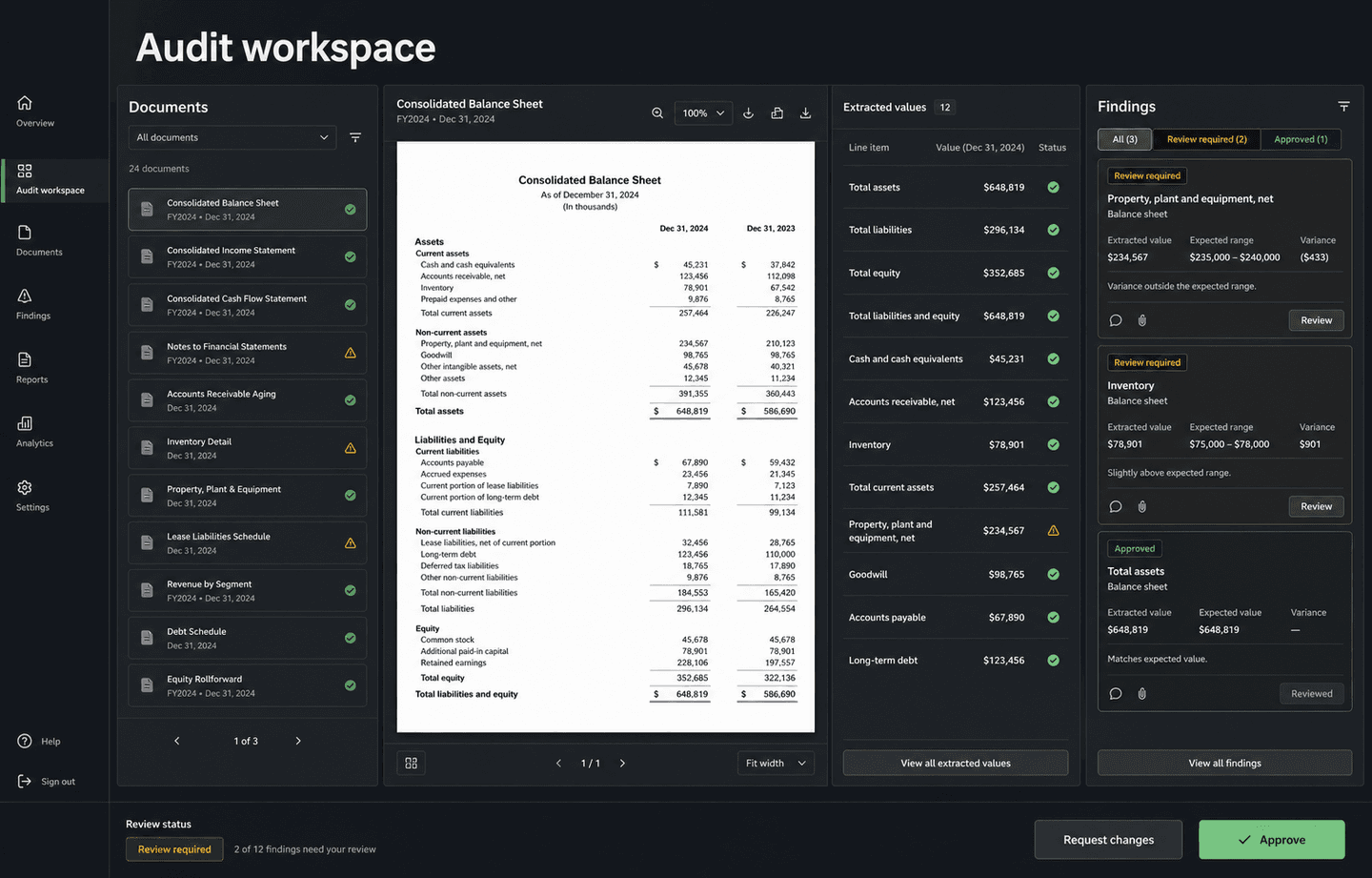
FinAudit AI
Financial audits that took days of document review, done by software.
Outcome
Reduced manual review time by ~60%.
Document & Customer AI
Use AI for a defined job: reviewing documents, finding exceptions, answering repeat questions, or organizing complaints and applications. Practical. Scoped. Human-reviewed where it matters.
01 — Document & Customer AI
Use AI for a defined job: reviewing documents, finding exceptions, answering repeat questions, or organizing complaints and applications.
Faster review. Consistent answers. Human approval where it matters.
Relevant delivery: FinAudit AI, reducing manual document-review time by approximately 60%.
Discuss a practical AI use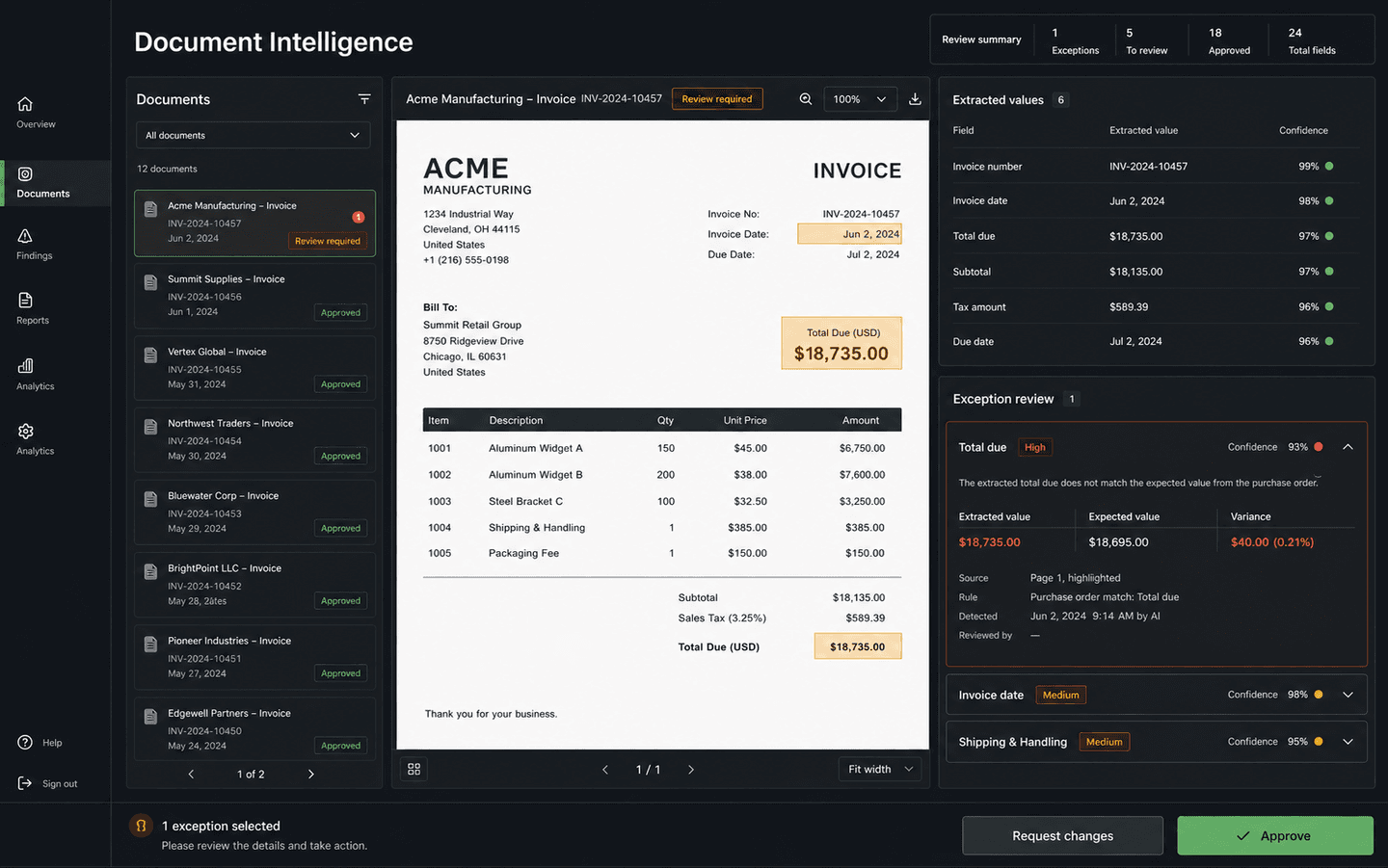
Common use cases
02 — Relevant work
Audit automation reducing review time by 60%. NLP sentiment analysis serving 1,000+ users. AI survey agents. Practical, not theoretical.
Financial audits that took days of document review, done by software.
Outcome
Reduced manual review time by ~60%.
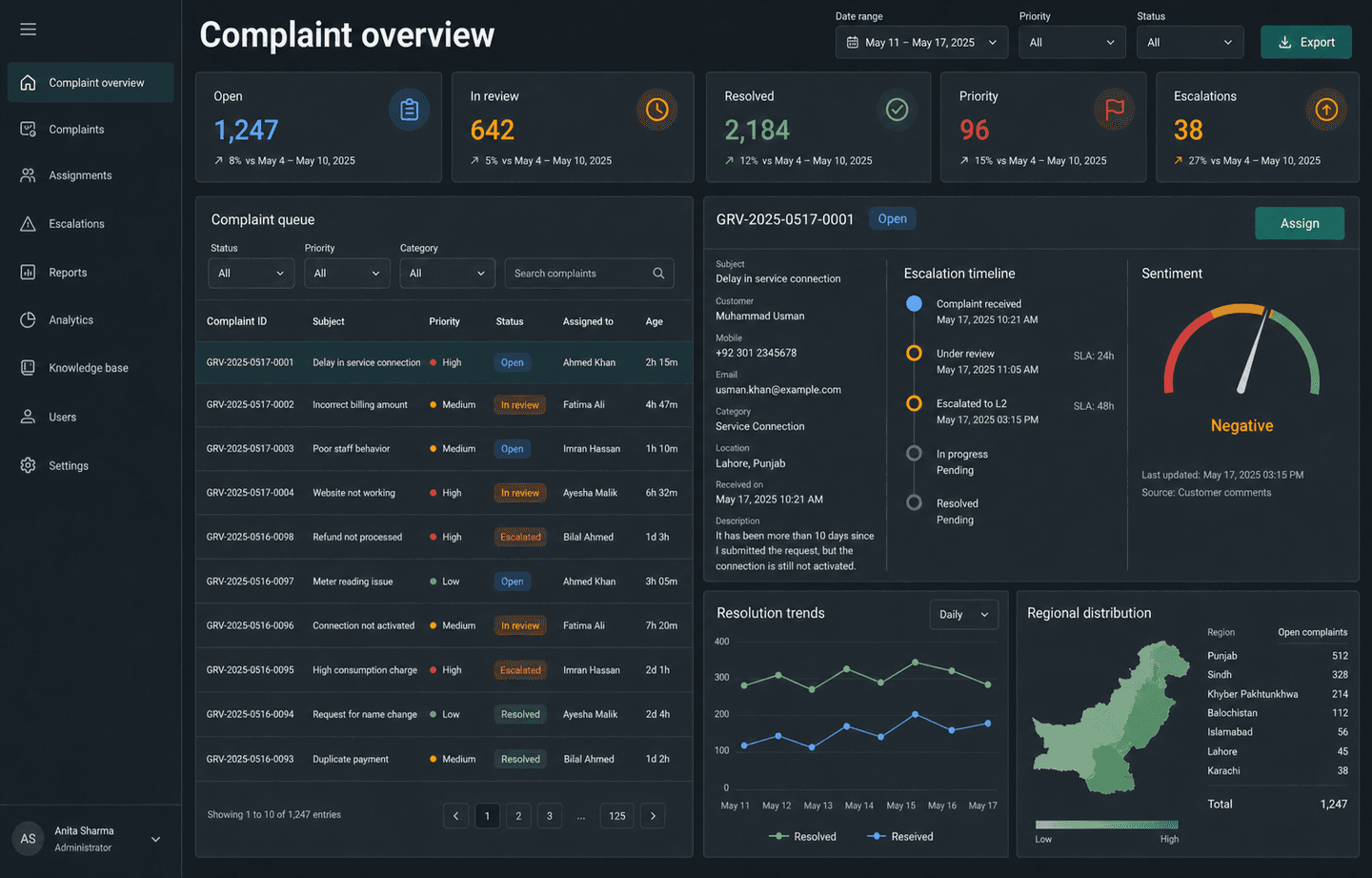
A complaint platform serving 1,000+ users, lifting resolution from 60% to 87%.
Outcome
1,000+ active users; resolution rate rose from 60% to 87%; escalations down ~30%.
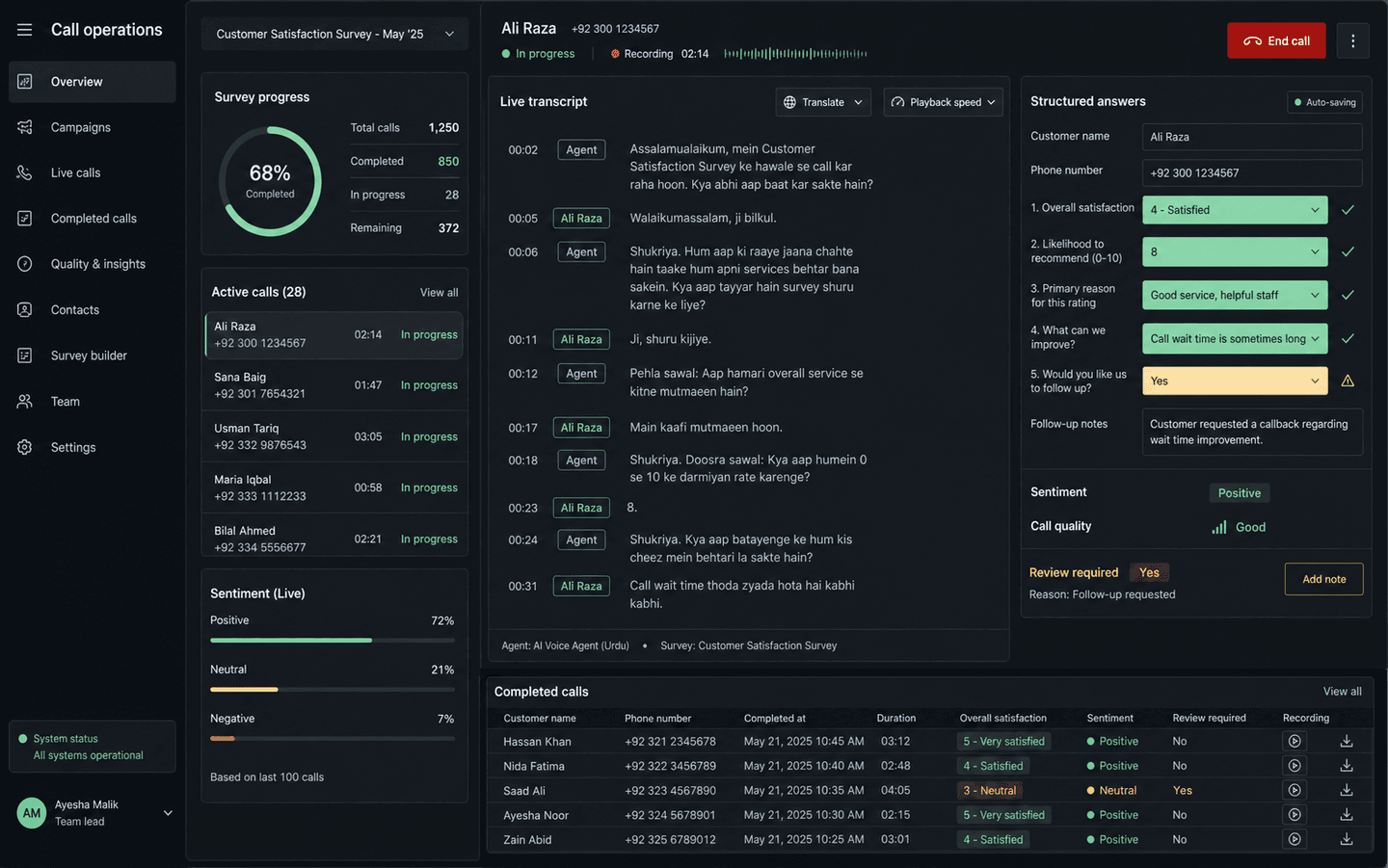
Survey calls and call transcription handled by AI agents instead of staff hours.
Outcome
Built and used internally for survey operations.
03 — Questions
The highest-value, lowest-risk AI uses are document review (checking contracts, invoices, applications for exceptions), complaint classification, and knowledge-based customer support assistants. We recommend starting with one specific job rather than a broad AI strategy.
Not always. Many practical AI applications use pretrained models that we adapt to your specific documents and workflows. A good starting point is 50–200 representative examples, not millions of records.
Yes. Modern language models handle English, Urdu, and Arabic documents. We test accuracy on your actual documents before recommending a model for production use.
For any consequential decision — approvals, exceptions, escalations — we build human review into the workflow. AI handles the reading and flagging; humans handle the final call where it matters.
We build a system that's connected to your actual documents, records, and workflows — not a general chatbot. The AI runs on your data, within your access controls, and produces structured outputs your team can act on.
04 — Before you commit
01
Source access, company data, repositories, exports, and handover terms are settled before development starts.
02
Deliverables, milestones, responsibilities, dependencies, cost, and timeline are documented before the build.
03
The people using the system get practical walkthroughs, clear roles, and support during adoption.
04
The post-launch support path is agreed before release, including fixes, monitoring, and planned improvements.
05 — Start with clarity
A sensible first engagement
Before committing to a large build, map the current process, users, data, integrations, risks, and the first release worth shipping.
Discuss a business process reviewWhat gets defined
Describe it in one WhatsApp message or voice note—in English or Urdu. We'll tell you honestly if software can fix it.
No technical brief needed. Start with the business problem.
