Practical AIFinance & compliance
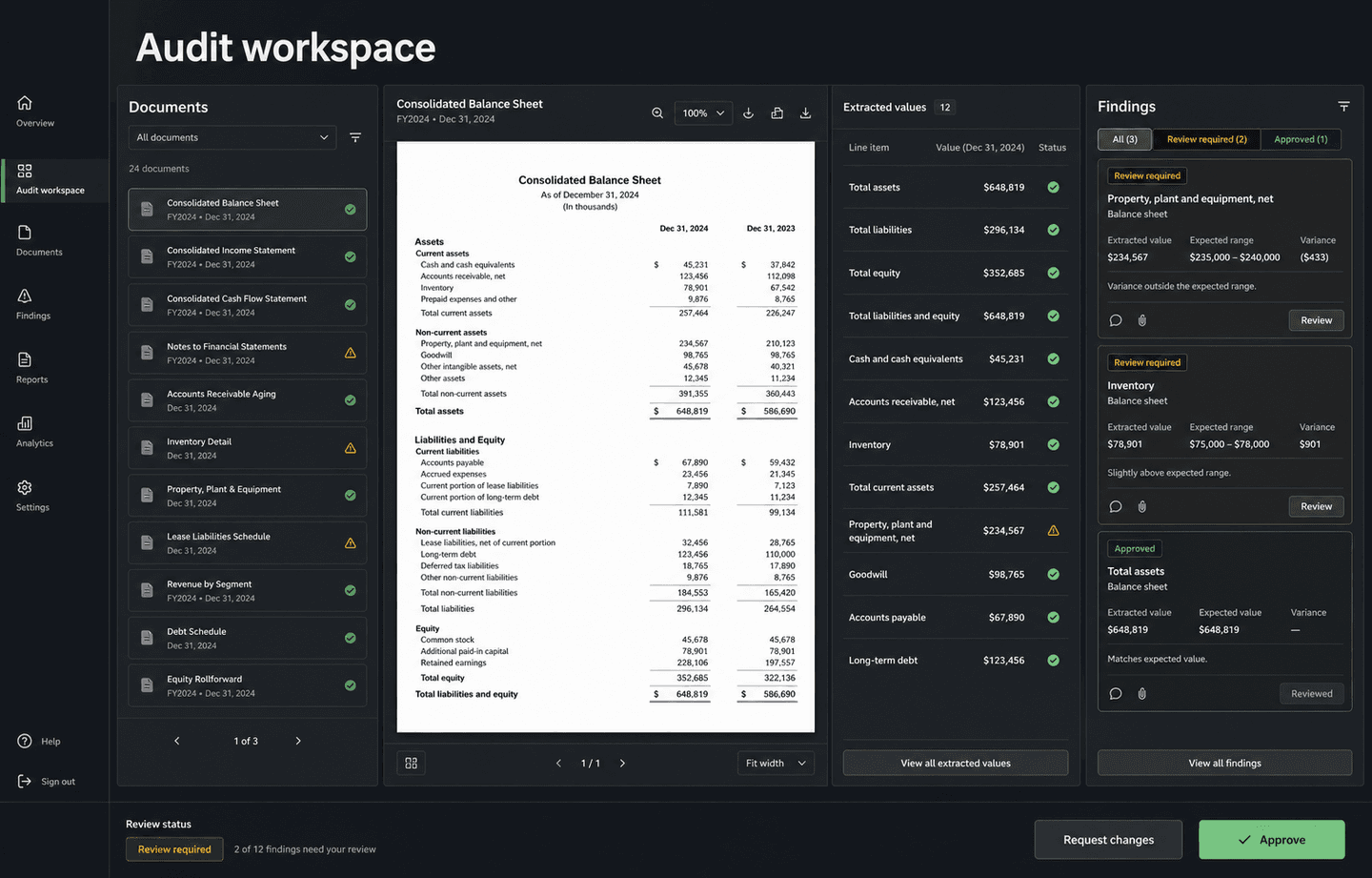
FinAudit AI
Financial audits that took days of document review, done by software.
Outcome
Reduced manual review time by ~60%.
Compliance & reporting
Replace document chasing and manual consolidation with structured evidence, clear responsibilities, review workflows, and audit-ready reporting.
Built for teams like
01 — Common pressure points
02 — What the system can cover
Relevant delivery includes FinAudit AI, textile and EU compliance platforms, human-rights due-diligence workflows, and sustainability reporting systems.
03 — How it flows
01
Documents and data collected in one structured system.
02
Checked against requirements with clear ownership.
03
Missing items and high-risk cases flagged automatically.
04
Audit-ready output generated on demand.
04 — Relevant work
Representative interfaces use sample data where client information is confidential.
Financial audits that took days of document review, done by software.
Outcome
Reduced manual review time by ~60%.
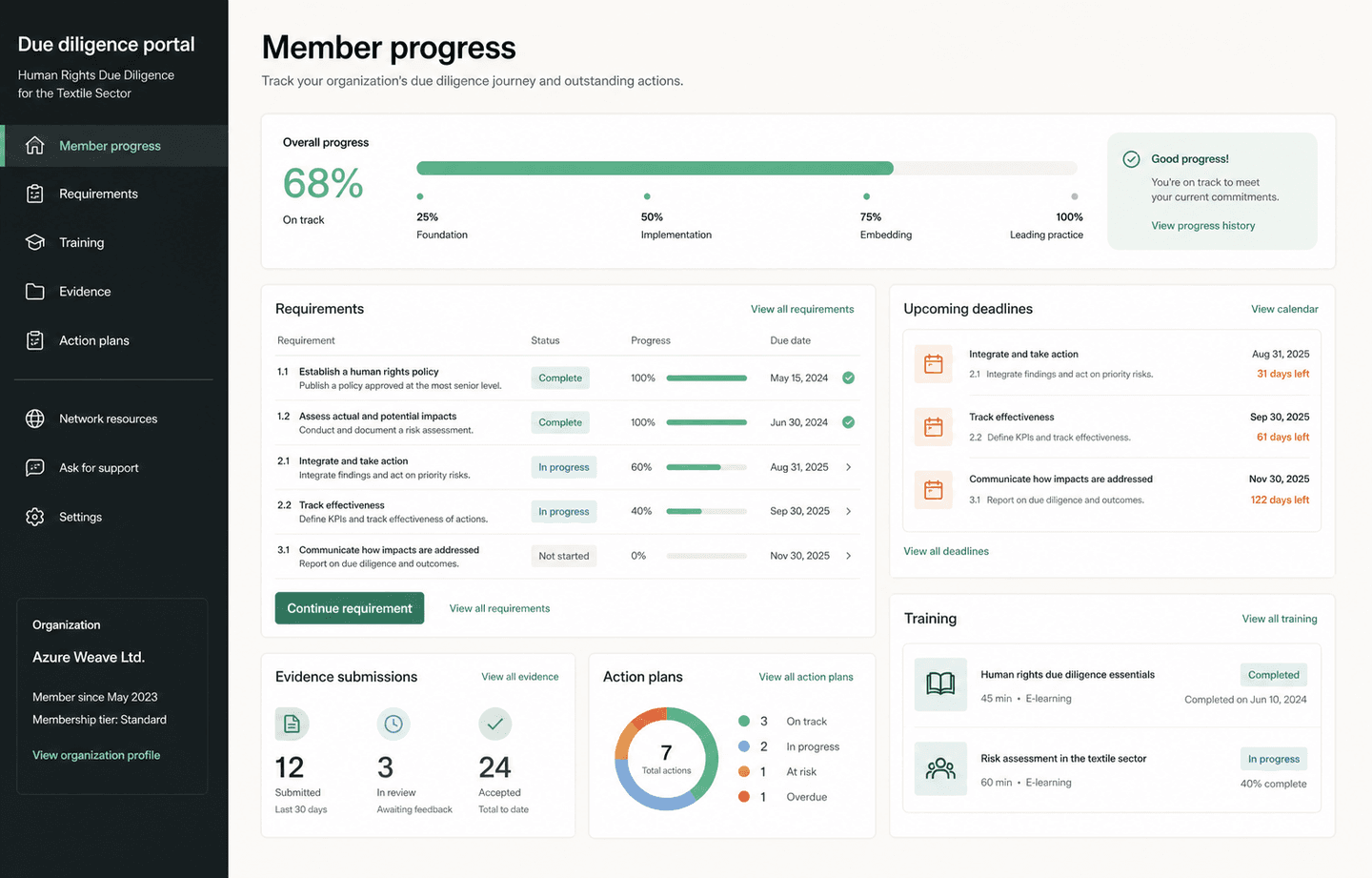
A member portal for tracking labor-rights due diligence across a global textile network.
Outcome
Delivered as a production member portal for an international organization.
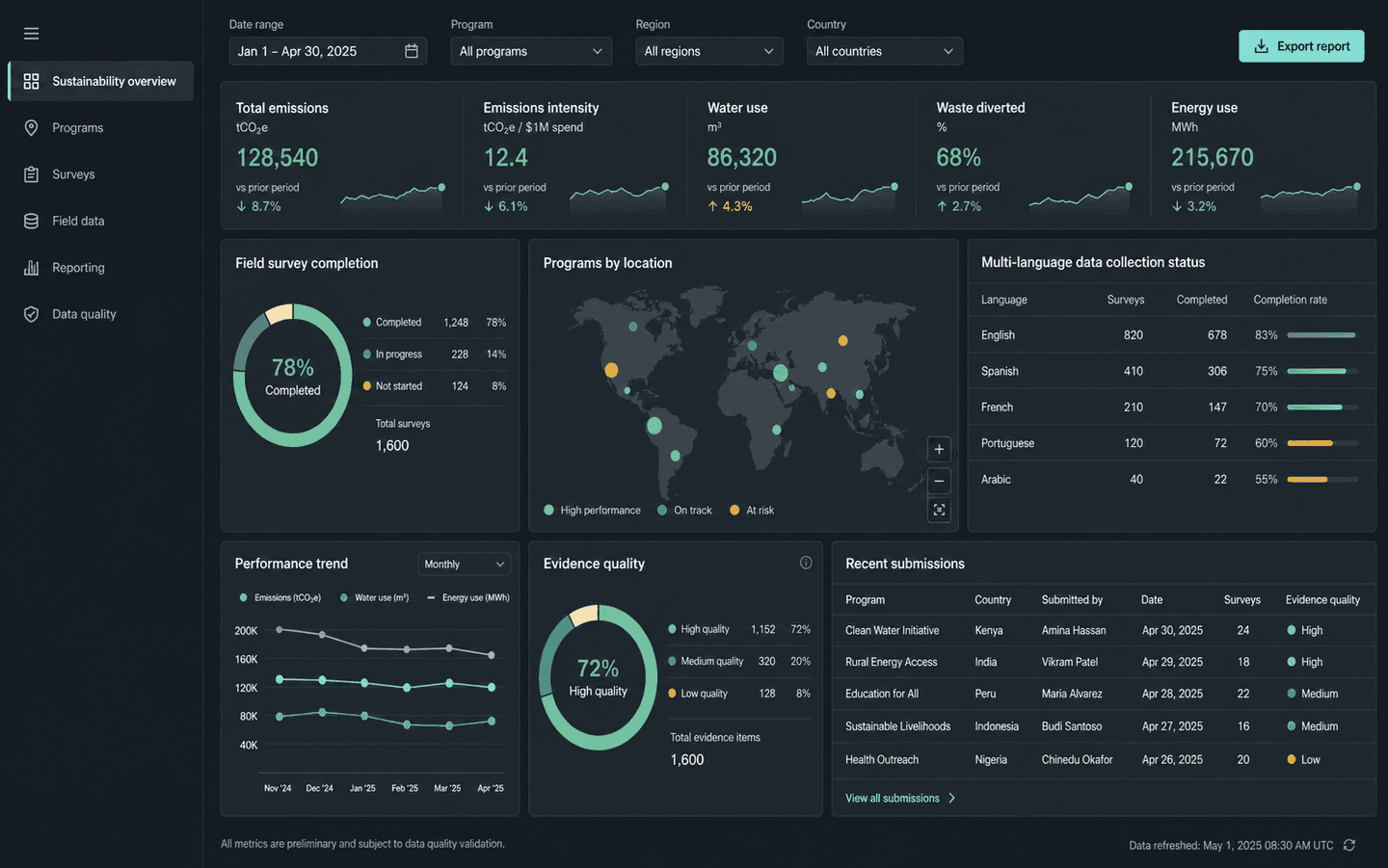
Real-time sustainability reporting dashboards built for an international conservation organization.
Outcome
In use for sustainability reporting.
05 — Questions for this industry
Yes — we've built production systems for EU deforestation compliance, human-rights due diligence, and sustainability reporting.
Not upfront. Most builds start with new evidence going forward, then backfill historical records as a second phase if needed.
Role-based access is standard — evidence submitters, reviewers, and management see only what's relevant to their role.
A sensible first engagement
Before committing to a large build, map the current process, users, data, integrations, risks, and the first release worth shipping.
Discuss a business process reviewWhat gets defined
Describe it in one WhatsApp message or voice note—in English or Urdu. We'll tell you honestly if software can fix it.
No technical brief needed. Start with the business problem.
